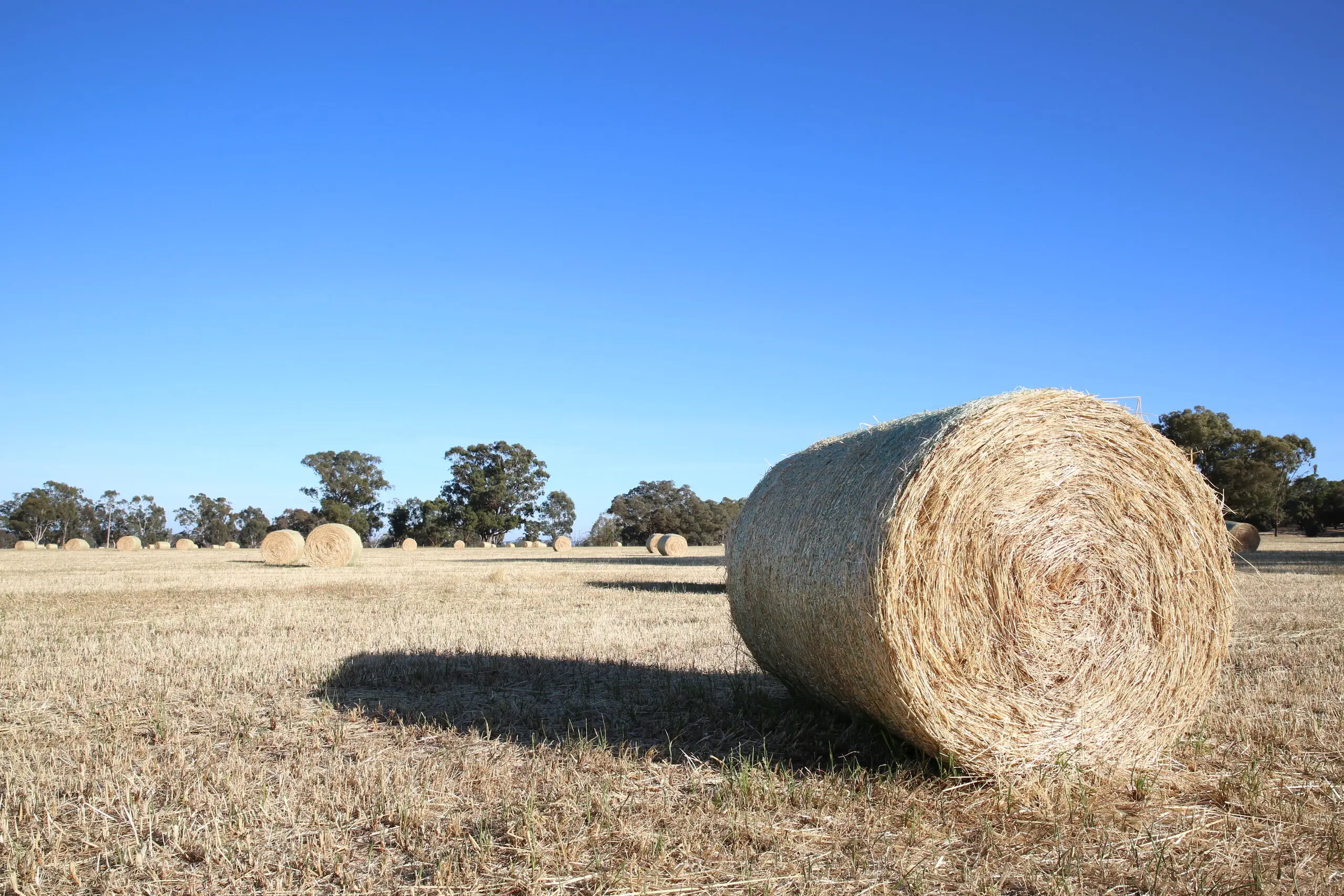
Hay bales in a harvested field
The CANOPY engine

One engine. 23 sectors. The connections between them.

CANOPY is an integrated production-simulation engine spanning crops, horticulture, and livestock. Each module simulates a sector in its own detail; the cascades link them so a single shock — weather, price, policy, or biosecurity — can be traced across the whole system.

How it works

Simulate. Connect. Stress-test.

01

Simulate

Each module models production at region×year resolution from published, source-attributed relationships — yield and volume for crops, gain and output for livestock, plus quality measures (sucrose/CCS, lint and micronaire) and externalities (welfare, heat-stress, methane).

02

Connect

Modules publish outputs that feed others. Grain and cottonseed flow into feed availability and feedlot gain; pollination flows into orchard volume and price. The coupling is the point — it's what single-sector models can't do.

03

Stress-test

Impose a shock — an exotic-disease incursion, a cyclone or flood, a drought, an input or energy crisis, a processing-chain failure — and read the consequences across every connected sector, week by week, all the way to which sectors hold and which are pushed past viability. Uncertainty is carried through rather than hidden.

The module suite

One coupled engine, twenty-three sectors

Each sector is part of one coupled engine, not a separate product. Detailed production modules are live for the sectors below and roll out across the rest of the twenty-three over time; the feedlot deep-dive is the deepest yet.

Avocados — Production Volume Simulator

Region×year yield-response with management levers (diesel, fertiliser, water, fungicide, hives/ha) and a pollination-collapse channel.

Pollination risk →

Sugar — Production Volume + Sucrose Simulator

Cane volume plus CCS/sucrose output, with a burning-mode toggle. Built on the Renouf and BSES research base.

Cotton — Production Volume + Fibre Quality Simulator

Lint t/ha and micronaire by zone and rotation, with cottonseed feeding the livestock cascade. Built on the Nguyen, Bange, and Hedayati research base.

Grains — Yield-Response Simulator

Per-region yield response that publishes a grains factor driving the downstream feed-availability cascade.

Pork — Production + Welfare + Market-Recovery Simulator

Production with welfare and market-recovery dynamics.

Chicken-meat — Production + Welfare + Heat-Stress Simulator

Production with welfare and a heat-stress channel.

Eggs — Production + Welfare + Heat-Stress Simulator

Lay production with welfare and a heat-stress channel.

Feedlot — Programmed-Gain Calculator

Engineering-grade gain modelling with per-day-on-feed carcase-weight pricing, an economic/welfare/biosecurity cascade panel, enteric-methane life-cycle accounting, and grain/cottonseed inputs from the cropping modules.

Deep-dive →
What you can stress-test

One shock, traced across the whole system

All twenty-three sectors are wired into one engine. Impose a shock on any of them and the model carries it everywhere it lands, through time, to a verdict on which sectors hold and which are pushed past viability.

Biosecurity & exotic disease

Emergency animal-disease incursions and the depopulation, movement-standstill, and market-recovery dynamics that follow — traced through to the sectors and supply chains downstream.

Natural disasters & extreme weather

Cyclones, floods, drought, and heat — resolved by region rather than smeared into a national average that hides where the damage actually lands.

Input & energy shocks

Diesel and fertiliser price spikes and rationing, applied across every sector's cost base at once — the way a real fuel or fertiliser crisis actually propagates.

Processing & supply-chain failure

Abattoir, mill, and processor outages and water-allocation cuts — the chokepoints where a regional problem becomes a system-wide one.

The delayed cascade

The engine's signature behaviour: a shortfall in one commodity that a reserve absorbs for a season, then bites a year later across everything that depends on it. Cause and effect can sit twelve months apart — and the model holds both ends.

Put it on your sector

Put it on your sector and your region.

A briefing takes your commodity, your geography, and the question you're trying to answer, and shows you the model against it — methodology included.

Request a briefing →