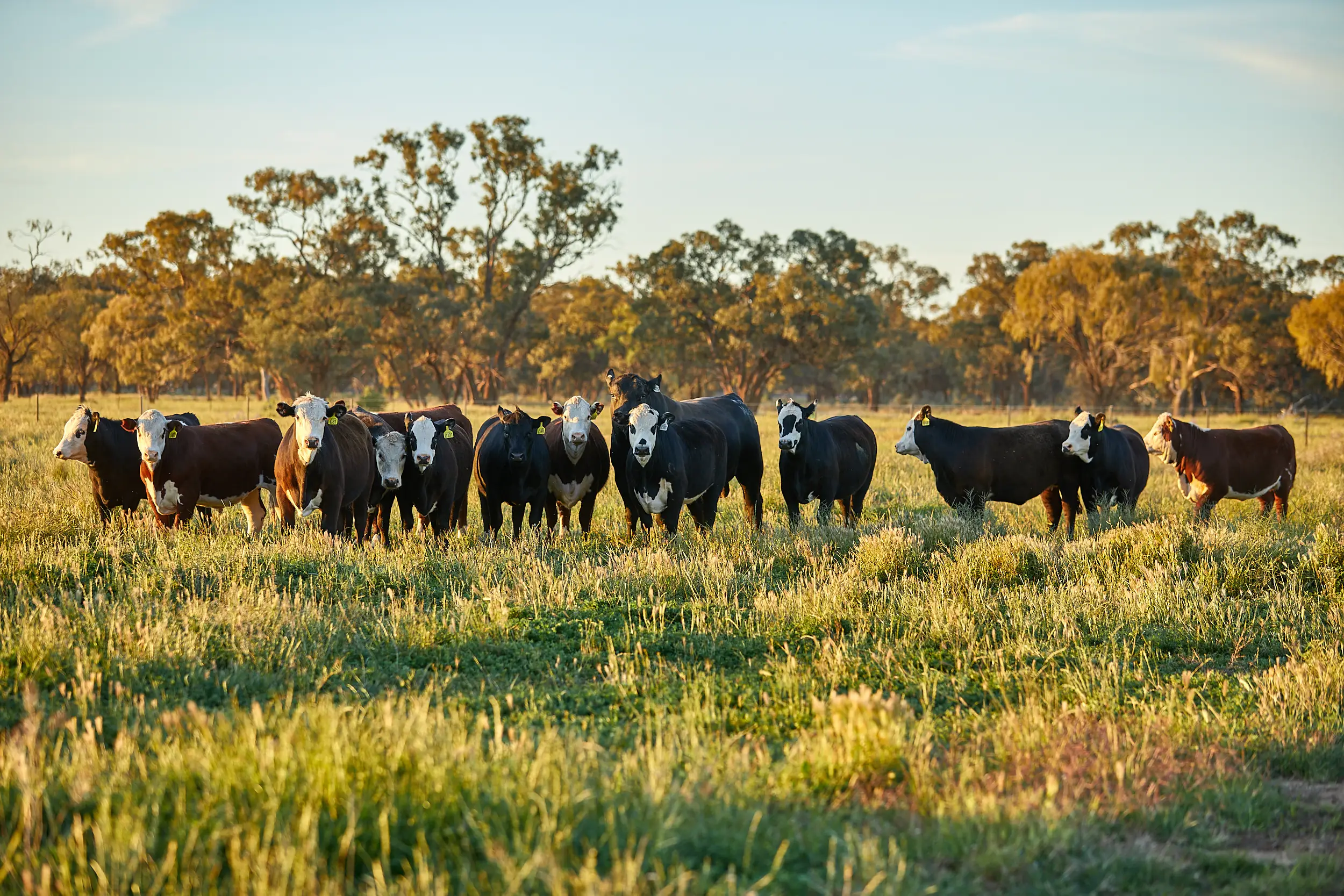
Every consignment of cattle loses a little weight between the paddock and the scales at the other end. It is called shrink, and the encouraging news from the latest research is how much of it sits within a producer’s control.
What actually drives shrink
A 2026 systematic review and meta-analysis by Elizabeth Parker (Ohio State, funded by MLA), pooling 26 studies and 1,896 head, set out to find which factors predict liveweight loss. The answer was unusually clean: only two variables mattered — the animal’s starting weight and the total time it spends off feed and water. Genetic type, sex, region, feed type, and — strikingly — whether the animal was even transported at all, were not significant.
That last point is the encouraging part. The journey itself isn’t the lever — what matters is the total time an animal spends off feed and water, and that is something you can plan for and shorten. It helps to think of shrink less as “transport loss” and more as time-off-feed-and-water loss: a number you can manage.
Parker’s predictive equation is: weight loss (kg) = −9.27 + 0.081 × start weight (kg) + 0.36 × hours off feed and water. The headline is that last coefficient: every hour off feed and water costs roughly 0.36 kg a head — and the hours are largely yours to manage.
The first hours are cheap — the long tail is what hurts
Not all shrink is equal, and this is the most useful idea for managing a journey. In the first hours off feed and water the weight an animal loses is mostly gut fill — the contents of the rumen and gut, passed as dung and urine. That weight is cheap: it comes straight back once the animal is back on feed and water. As the time off feed and water stretches on, the loss shifts from gut fill to body tissue and cellular water — true dehydration. That weight is expensive: it is slow to recover, and it is where the cost to the animal concentrates. Reviews of transport shrink put tissue loss at over 60% of the total in long, severe events, versus only a sliver in a short curfew (Coffey et al. 2001).
A short curfew or a short haul costs you little — cheap, fast-recovering gut fill. It is the long tail, the prolonged time off feed and water, that does the damage. Shrink may look linear in kilograms, but its real cost is not: the early hours are nearly free, the later ones are not.
Why low shrink pays at the other end
The reason to care isn’t only the weight on the scales at sale — it is how the cattle perform once they arrive. Animals that have spent less time off feed and water tend to do better afterwards.
In an analysis of more than 16,000 cattle groups across 13 commercial feedlots, transit weight loss was significantly associated with respiratory disease, mortality, carcase weight and daily gain — and, tellingly, combining shrink with basic mob information improved the prediction of how the cattle would perform and stay healthy (Cernicchiaro et al. 2012). The mechanism is appetite: after a long haul cattle eat measurably less for about a week — less even than animals simply held off feed without the trip — so the rumen, and the gain, take days to come back (Heiderscheit et al. 2022).
Two honest caveats. This is largely an association: cattle that shrink more have usually also travelled further or been handled harder, so shrink is partly a marker of a tough trip rather than its sole cause. And most of this data is North American; directly-consigned Australian cattle may see smaller effects. But the direction is consistent and the lever is the same — less time off feed and water.
A number you can agree on before you load
Because shrink is predictable from two things you know in advance — the animal’s weight and the time it will spend off feed and water — it needn’t be a surprise settled by rule of thumb after the fact. Today it is handled by convention: a curfew before sale, or a flat percentage knocked off the weight. An estimate made before the journey turns that into something buyer and seller can both see and agree on — a fair, transparent allowance built on the actual trip, and a way for a buyer to price the condition cattle will arrive in, not just their weight on the day.
The levers are yours
If the clock is the driver, then the decisions that set the clock — at the vendor’s end and the buyer’s end — are where the money and the welfare outcome are won.
Feed and water to loading
Keep cattle on feed and water as close to loading as practical. Hay in the yards up to the truck, water available until the last moment — every hour saved is shrink avoided.
Curfew with intent
Shrink is front-loaded — most of it happens early, as gut fill is lost. A long pre-transport curfew can give away much of that loss before the journey even begins, so curfew for a clear purpose and only as long as it serves one.
Minimise standing time
Saleyard time, marshalling, and lairage at the destination all add to the same clock. Fast re-access to feed and water on arrival shortens it.
Where welfare and economics pull the same way
Reducing time off feed and water is good economics and good welfare — but there is a hard floor. The Australian Land Transport of Livestock Standards set a mandatory maximum time off water: 48 hours for adult cattle, and 24 hours for pregnant or lactating cattle and young calves (less again for very young calves). These are not targets to approach; they are limits, and the welfare case for staying well under them is the same case that reduces your shrink.
Put it on your own numbers
Our free Feeder Transport Shrink Estimator runs Parker’s model on your cattle: enter a start weight and the total hours off feed and water, and it returns the predicted shrink in kilograms and percent, the dollars at your c/kg, the kilograms you recover per hour you cut — and a check against the regulatory ceiling for the class of cattle you’re moving.
Sources
- Parker, E. (2026). Body weight and feed and water deprivation time predict cattle body weight loss from transportation. Animal Production Science 66, AN26109.
- Cernicchiaro, N., White, B. J., Renter, D. G., et al. (2012). Effects of body weight loss during transit from sale barns to commercial feedlots on health and performance in feeder cattle cohorts arriving to feedlots from 2000 to 2008. Journal of Animal Science 90(6), 1940–1947.
- Heiderscheit, K., Freestone, A., Beenken, A., et al. (2022). Long-duration transit and food and water deprivation alter behavioral activities and feed-bunk interactions in beef feedlot steers. Journal of Animal Science 100(3), skac060.
- Coffey, K. P., Coblentz, W. K., Humphry, J. B., Brazle, F. K. (2001). Review: basic principles and economics of transportation shrink in beef cattle. The Professional Animal Scientist 17(4), 247–255.
- NSW DPI (2024). A report into the effects of pre-transport curfew of livestock off feed and water.